Independent Slimzol guide, not the brand's official site. Order links here are affiliate links.
Home / Proprietary Blend
Label guide · November 2026

Proprietary Blends: Reading Between the Lines

Many supplement labels group their ingredients under a "Proprietary Blend" line. Here is what the labeling rule requires that line to show, what it leaves out, what extract ratios mean, and how this works on one real label.

Total weight shownOrder by weightRatios explained
See Slimzol Packs See an Example Label
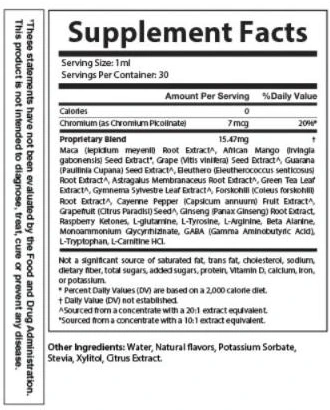
A Supplement Facts panel with a 15.47 mg proprietary blend

Editorial disclosure: goslimzol.com is an independent guide and is not the manufacturer, distributor or seller of Slimzol. It contains affiliate links, and we may earn a commission if you purchase through them, at no extra cost to you. These statements have not been evaluated by the Food and Drug Administration. Slimzol is not intended to diagnose, treat, cure, or prevent any disease. Consult a healthcare professional before use.

The rule

What a Proprietary Blend Is on a Supplement Label

A proprietary blend is a group of dietary ingredients listed together on a Supplement Facts panel under a single heading, such as "Proprietary Blend" or a brand-chosen name. US labeling rules for dietary supplements, set out in 21 CFR 101.36, decide what that heading has to show.

The blend's total weight

The line has to give the combined weight of the dietary ingredients in the blend, printed on the same line as the blend's name.

Ingredients by weight

Ingredients without a Daily Value, such as plant extracts and amino acids, are listed in descending order of predominance by weight, indented under the blend's name.

No amount per ingredient

For those ingredients, the rule asks for the order and the total, not for the weight of each ingredient.

21 CFR 101.36(c): proprietary blends
Reading one

What You Can and Cannot Learn From a Blend Line

What the label tells you

  • Every ingredient in the blend, by name
  • Which ingredient is the largest (the first one) and which is the smallest (the last one)
  • The total weight of the whole blend, which is also the most any single ingredient can weigh
  • Any extract ratio the brand chooses to print, such as 20:1

What it does not tell you

  • How much of each ingredient there is, except that each is no heavier than the one before it
  • Whether a given ingredient reaches the amounts used in research
  • How standardized an extract is, unless the label states it

A quick check: divide the blend's total weight by the number of ingredients. That gives the average share per ingredient. It is only an average, because the list is in descending order, but it helps you put the blend in context.

Ratios

Extract Ratios Inside a Blend: 20:1 and 10:1

Labels often mark extracts with a ratio. A 20:1 extract was made from about 20 parts of plant material for every part of finished extract. The ratio tells you how concentrated the extract is. It does not tell you how much of the extract is in a serving: that is still limited by the blend's total weight.

An example label

Example: the Slimzol Blend

The Slimzol label lists a "Proprietary Blend" of 15.47 mg per 1 mL serving with 21 ingredients. They start with maca root extract and end with L-carnitine HCl. The average works out to about 0.74 mg per ingredient, and the first ones are larger than the last ones. Most of the plant extracts are marked "^" for a 20:1 concentrate, and African mango is marked "*" for 10:1. Outside the blend, chromium is listed on its own at 7 mcg, because it has a Daily Value. The full panel is on the Slimzol ingredients page.

See Slimzol on Its Order Page

Questions

Proprietary Blend: Questions People Ask

What does proprietary blend mean on a supplement?

A group of dietary ingredients listed under one heading, with the blend's total weight. Ingredients without a Daily Value appear in descending order by weight, without an individual amount for each.

Do supplement labels have to list the amount of each ingredient in a blend?

Not for blend ingredients without a Daily Value. Under 21 CFR 101.36, the label gives the blend's total weight and lists those ingredients in descending order by weight.

How do I know the main ingredient in a proprietary blend?

It is the first one listed. Blend ingredients are listed in descending order of predominance by weight.

Is a proprietary blend bad?

It is a labeling format, not a quality judgment. It does mean the label gives no amount for individual ingredients. If those amounts matter to you, ask the brand.

What does 20:1 extract mean?

About 20 parts of plant material went into 1 part of extract. It describes concentration, not how much extract is in a serving.

How big is the Slimzol proprietary blend?

15.47 mg per 1 mL serving, shared by 21 ingredients. See the Slimzol ingredients page.

Thinking About Slimzol?

Slimzol is a 30 mL dropper bottle, one dropperful a day, so each bottle covers about a month. Packs of 3 or 6 bottles ship free, and orders from the official page come with a 60-day money-back guarantee. The Slimzol buying guide covers ordering, support and returns.

Open the Slimzol Order Page